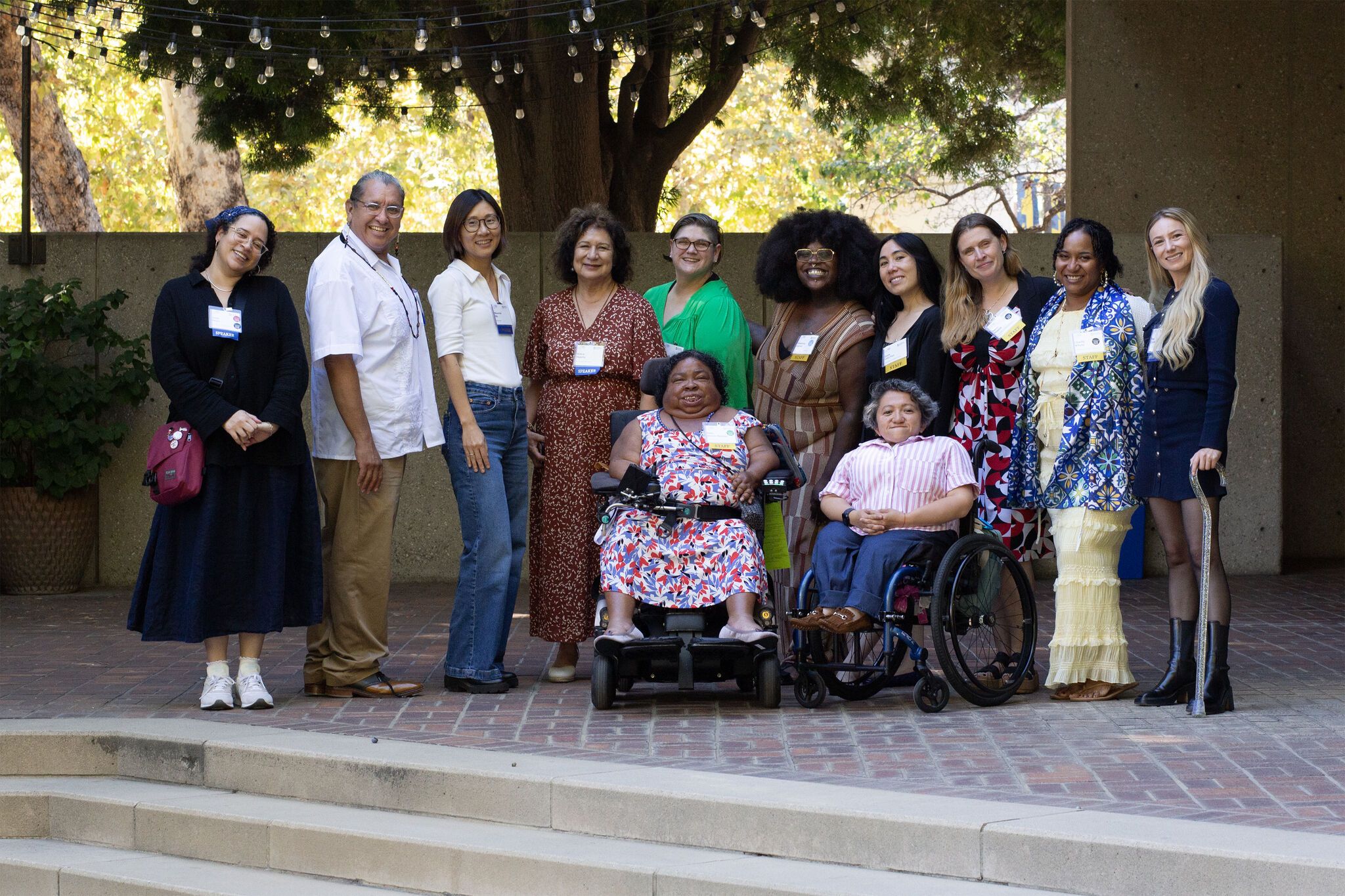
Members of the Disability Inclusion Fund and Disability Philanthropy Forum teams pose together for a group photo in an outdoor courtyard beneath a large tree and string lights.
At Borealis Philanthropy, we know that the fight for disability justice and inclusion is deeply connected to the fight for housing, healthcare, economic security, and freedom. Recognizing these connections means continually examining who our systems serve, where they fall short, and what it will take to build a more inclusive future.
Few places hold as much history in this struggle as California, the birthplace of Disability Justice movements where generations of organizers have challenged exclusion and helped pave the way for change nationwide. In honor of this rich legacy, our Disability Inclusion Fund (DIF) and partners at the Disability & Philanthropy Forum convened two town halls in Berkeley and Los Angeles last month, bringing together disability justice leaders, funders, and policymakers to reflect on today’s challenges and what state-based organizers can teach us all about the work that lies ahead.
From reimagining systems of care with Congresswoman Lateefah Simon and our grantee partners at Hand in Hand — to advancing economic justice with Senior and Disability Action, Aim Power, and Generation Patient — to building cross-movement solidarity with Canary Resistance and LA Spoonie Collective, it was a privilege to learn from and alongside leaders whose brilliance illuminates the real consequences of policy decisions and how our collective power can shape truly inclusive multiracial democracy. Below, we share a few lessons we’re carrying forward from our town hall conversations.
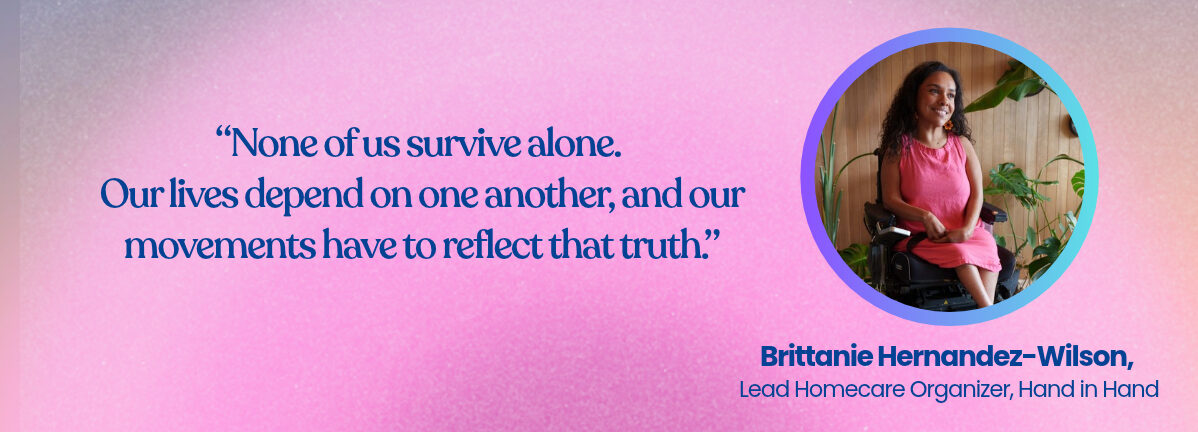
Disability justice cannot be advanced in silos.
The policies and decisions shaping disabled people’s lives have consequences that reach far beyond any one issue area. When funding for in-home caregivers is cut, disabled people who rely on their assistance may struggle to remain in their own homes, while inaccessible transportation can limit opportunities for work and community participation. Funders must look beyond individual issue areas and invest in disabled-led organizing and policy advocacy that protects access to care, housing, and independence.
“All policy is disability policy.”– Katie Caldwell, Director of Research & Policy, UCLA’s Center for Racial & Disability Justice
Systems intended to support disabled communities can perpetuate harm.
These connections also reveal how policies meant to support disabled people can create barriers of their own. For those who rely on public benefits, earning more or saving for emergencies can put their assistance at risk. Supplemental Security Income (SSI), for example limits an individual’s assets to $2,000—a limit Congress hasn’t raised since 1989.
People with disabilities shouldn’t have to choose between earning money and surviving. These restrictions are policy choices that can be changed, and philanthropy can help resource the disabled-led research and organizing needed to change them.
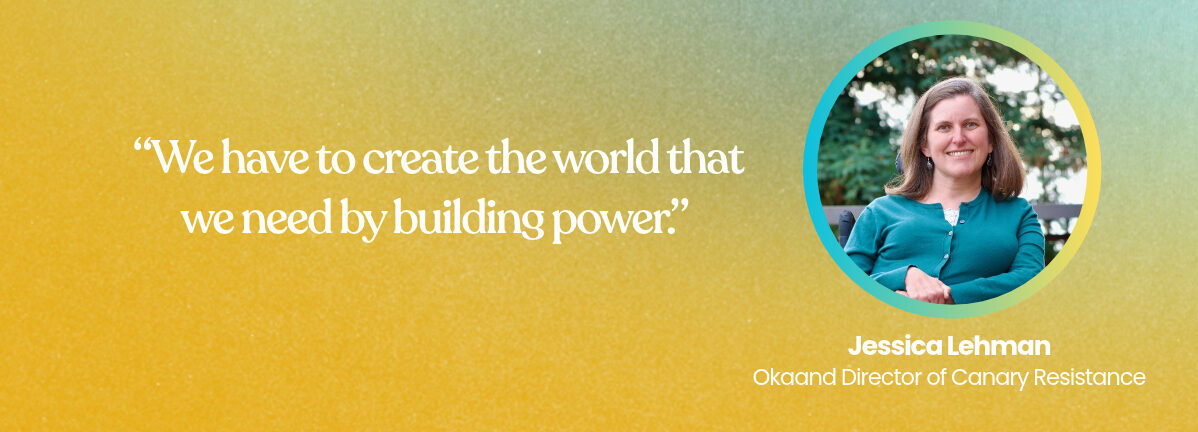
Advancing disability justice requires investing in access and participation.
Across California and beyond, disability justice leaders are challenging criminalization, advocating for stronger protections in healthcare and technology, and building networks of care and solidarity. Yet even the costs of transportation, captioning, accessible gathering spaces, can create barriers to their participation. Philanthropy must account for these needs from the start, funding the infrastructure that make organizing possible alongside the programs and initiatives communities are leading.
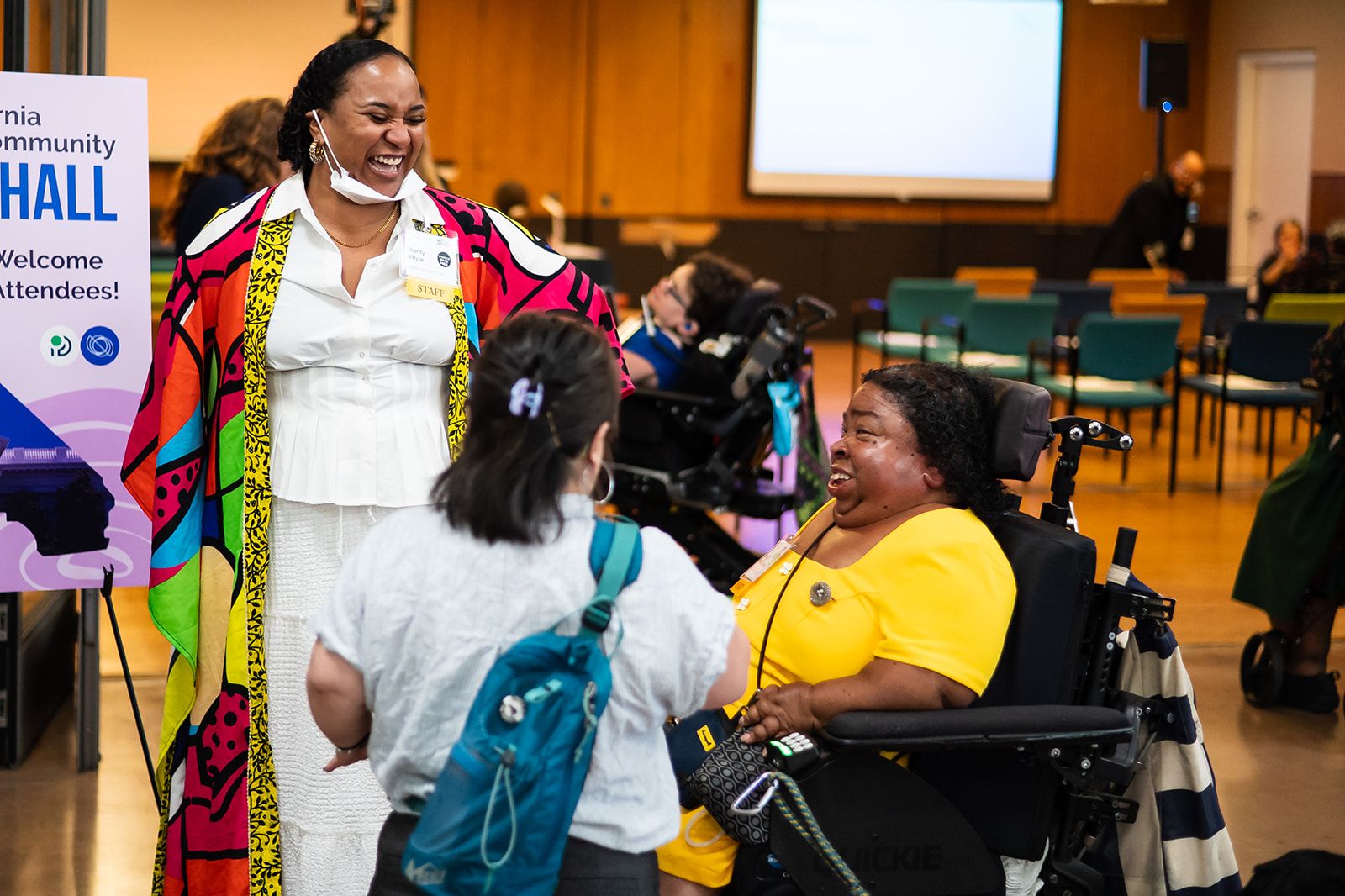
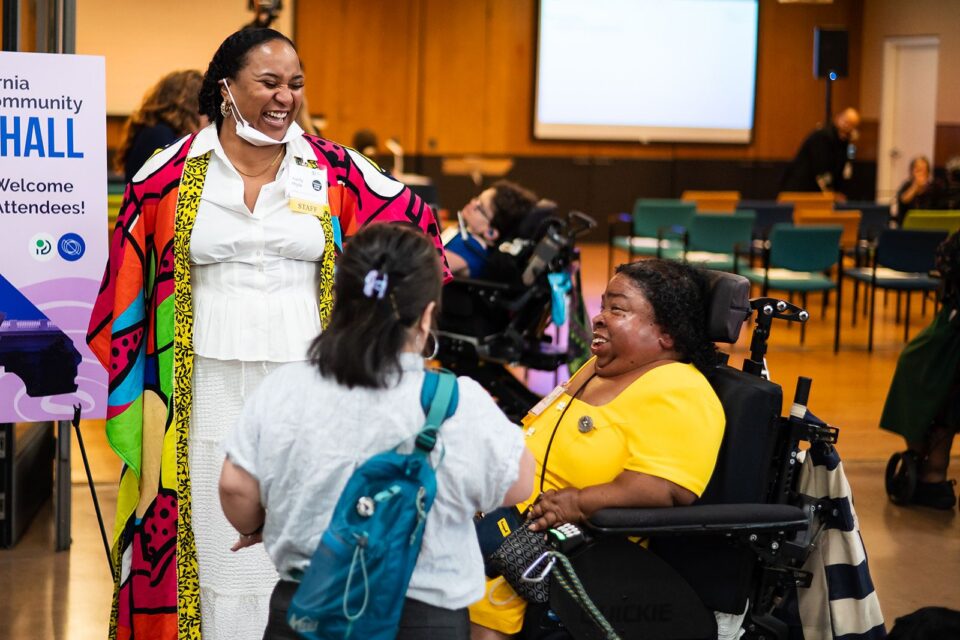
Charity Whyte, DIF Program Officer, stands in a colorful patterned wrap and white outfit, next to Nikki Brown-Booker, DIF Program Director, who is seated in a motorized wheelchair wearing a bright yellow dress. Both smile alongside another attendee at a community town hall.
How Funders Can Put These Lessons Into Action
The wisdom shared at these town halls in California feels especially energizing as we bear witness to what years of organizing, resistance, and collective action can make possible across the country. Communities’ recent hard-won challenges of voter suppression and victories around political representation give us hope and even more reason to double down on the work ahead. For philanthropy, that means matching this moment of possibility with the resources and commitment needed to sustain it. Here’s what that looks like in practice:
- Provide flexible, multiyear funding that gives disabled-led organizations the resources to organize, respond to community needs, and advance long-term solutions.
- Invest across movements, recognizing the connections between disability justice, housing, healthcare, immigrations rights, economic security and more.
- Fund accessible spaces for leaders to convene, dream, and scheme, covering the true costs of participation and opportunities to organize together.
- Trust disabled leadership and share decision-making power, ensuring their expertise shapes the funding priorities and policies affecting their lives.
- Partner with intermediaries like Borealis Philanthropy to move resources directly to grassroots organizations advancing disability justice and inclusion in California and beyond.
At the Los Angeles town hall, Grace Miranda Huerta urged donors to “give until it hurts because it will hurt more if nothing is done.” We invite you to join us in honoring that call, investing today in the disability justice leaders whose work will make a more accessible and loving world possible for generations to come.